
Okay, so check this out—blockchain explorers are boring until they’re not. I used to skim transaction IDs and feel my eyes glaze over, but Solana changed that for me. Solscan, in particular, made things fast, readable, and oddly satisfying when you finally track down a slipped SPL token transfer or edge-case program error. My instinct said it would be another clunky UI. Really? It surprised me.
If you’re a regular Solana user — trading, minting NFTs, running a listener, or debugging programs — Solscan deserves a spot in your bookmarks. It’s one of the more user-friendly explorers for Solana, with quick lookup, token metadata, and developer-facing details when you need them. I’ll walk through the features I use daily, pitfalls I’ve run into, and practical tips to speed up your work without getting lost in raw logs.
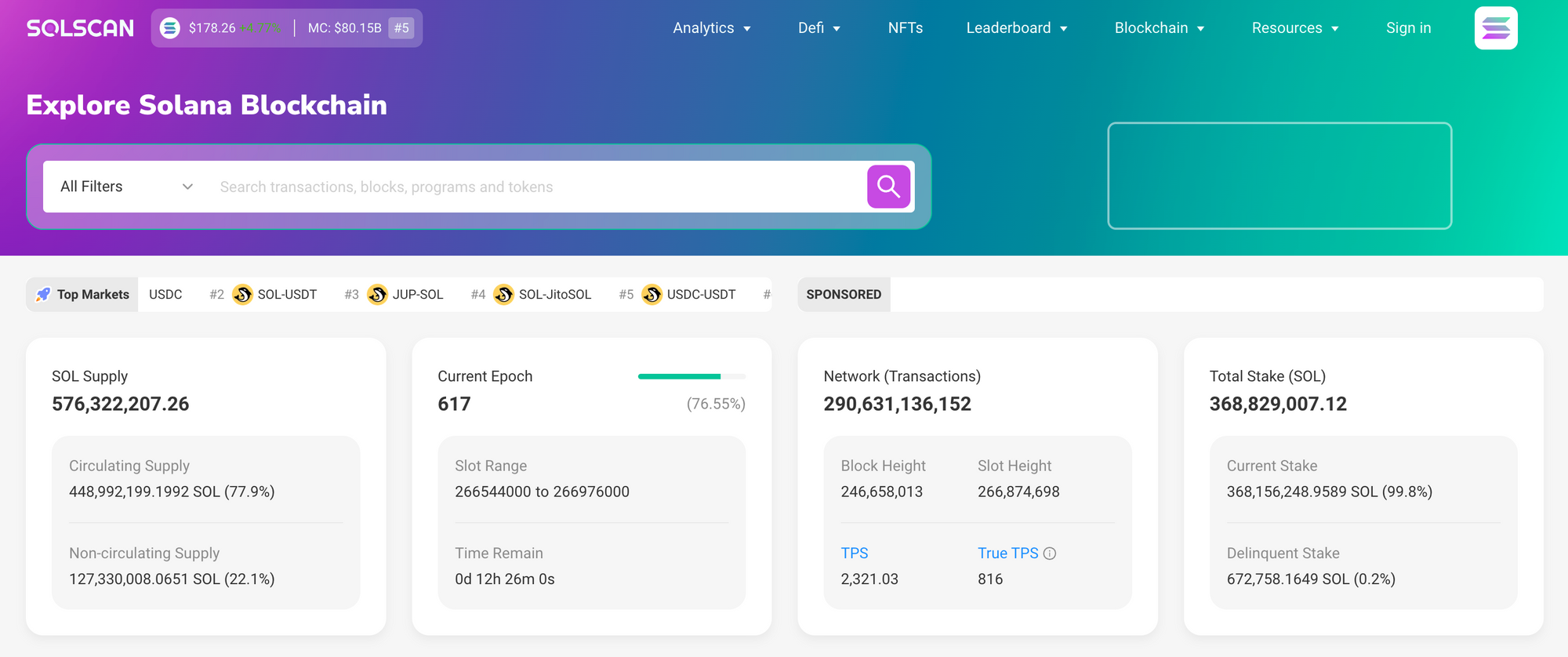
Why Solscan? Quick take
At a glance, Solscan blends two things I care about: speed and clarity. The UI is responsive, searches are forgiving (you can paste a TX, address, token mint, or block and it usually figures it out), and the views group info in a way that’s actually useful. There are other explorers — each has strengths — but Solscan gives a balanced middle ground: friendly for end-users, deep enough for devs. Oh, and the analytics dashboards are neat when you want a higher-level pulse on activity.
One practical note: Solscan isn’t the blockchain. It’s an interface that queries nodes and indexers. Most of the time it’s synced and accurate, though rare glitches happen if the indexer lags or RPC endpoints hiccup. If something looks off, double-check against another explorer or a direct RPC call.
Core features I use every day
Search and quick lookups. Paste a wallet address, tx signature, token mint, or program ID. Solscan guesses right more often than not. Seriously—instant gratification.
Transaction details. This is the meat. Solscan breaks down: instruction list, accounts involved, SPL token transfers (even internal token moves), compute units used, and the full program logs. When a transaction fails, those logs often tell the story—program error codes, custom prints, runtime errors. For debugging, this cuts hours off the hunt.
Token pages. Want the mint info, holder distribution, recent transfers, or token supply? The token page aggregates it cleanly. I check these pages before buying new mints; holder concentration and transfer velocity are telling signals.
NFTs and metadata. Solscan shows NFT metadata, creators, royalties, and marketplace listings (where available). Not perfect, but good enough to see provenance and basic rarity details. If you’re minting or verifying royalties, this saves a lot of guesswork.
Program and account explorers. For builders, the ability to inspect program logs, parse BPF instruction layouts, and view account data is valuable. You’ll see encoded data, and sometimes Solscan provides decoded views for common programs.
Advanced tips — squeeze more utility out of Solscan
Use filters and watch lists. Set alerts or track addresses you care about. I follow a few program IDs and high-profile wallets to spot trends. It’s like having a tiny radar for movement that matters to me.
Follow compute unit trends. If your transactions are close to limits or you’re optimizing fees, the compute unit and fee breakdown helps you prototype smaller calls. On one project, trimming a heavy instruction into two light ones cut retries dramatically.
Cross-check with the blockchain. If something smells off — a suspicious token supply, a weird transfer — hit another explorer or directly query an RPC endpoint. Solscan is great, but redundancy is wise, especially with money on the line.
Leverage program logs. When devs add print statements (or use msg! macros), Solscan surfaces those. My habit: trigger the transaction, then immediately open the logs. Most mistakes are obvious once you see the runtime output.
Things that bug me (and how to avoid them)
Indexing delays. Occasionally Solscan’s index lags behind the latest blocks. That’s annoying when you’re waiting on a confirmation screen. Workaround: a direct RPC getTransaction or a second explorer check. Also, if you rely on real-time feeds for trading bots, don’t depend solely on a public explorer.
Metadata gaps. NFT metadata or token details sometimes don’t appear because off-chain metadata is missing or the URI is inaccessible. It happens. When in doubt, fetch the off-chain JSON directly from the mint’s metadata URI.
Complex logs are noisy. Long program logs can be hard to parse visually. I copy logs and paste them into a text editor for searching and cleanup when I’m troubleshooting a hard bug.
Where to get started — short checklist
1) Paste one signature into Solscan. Read the instruction list and logs. See how your wallet, token transfers, and program calls appear. 2) Open a token mint page. Check supply and holders. 3) Trigger a failing tx in a dev environment and inspect logs. You’ll learn faster by seeing errors than by reading docs alone.
If you want the official Solscan portal to explore further, start here. That’s where I usually point folks when they’re first getting comfortable; it’s simple and direct.
Frequently asked questions
Is Solscan safe to use for viewing private transactions?
Solscan is a read-only interface; you can view public blockchain data without exposing keys. Don’t paste private keys or seed phrases anywhere. If you connect a wallet through a third-party site, make sure the site is trusted and you’re using a secure wallet provider. Solscan itself is just an explorer.
Why does a transaction show “confirmed” but not appear?
That can mean indexing lag or that the RPC node returned a preliminary status. Wait a few seconds and refresh, or check another explorer or RPC. If many nodes disagree, it could be a fork re-org—rare but possible on heavy networks.
Can Solscan decode custom program data?
Sometimes. For well-known programs and common instruction layouts, Solscan provides decoded views. For custom BPF programs, you may see raw data unless a decoder has been implemented. Developers can write tooling or integrate parsing to make such data friendlier.