
Okay, so check this out—I’ve been poking around Solana explorers for years now, and somethin’ about Solscan keeps pulling me back. Wow! It feels faster. It feels cleaner. And honestly, my instinct said: “This is the one to use when you need answers right now.” Initially I thought all explorers were roughly the same, but then I started comparing runtimes, UI snags, and how NFT transfers are presented—and things changed. On one hand, Solscan surfaces transaction details quickly; on the other hand, some features still feel like workarounds. Hmm… seriously, palatable trade-offs.
Short version: if you’re a trader, dev, or NFT collector on Solana, you want an explorer that doesn’t make you dig. Really? Yes. But beyond that headline claim there’s nuance—like what data you care about, how often you need it, and whether you want analytics or just raw transaction logs. Here’s the thing. I’m biased toward tools that save time. This piece walks through why I use Solscan as my go-to, how I hunt NFTs with it, and what to watch for when you’re vetting any blockchain explorer.
My first impressions and the nitty-gritty
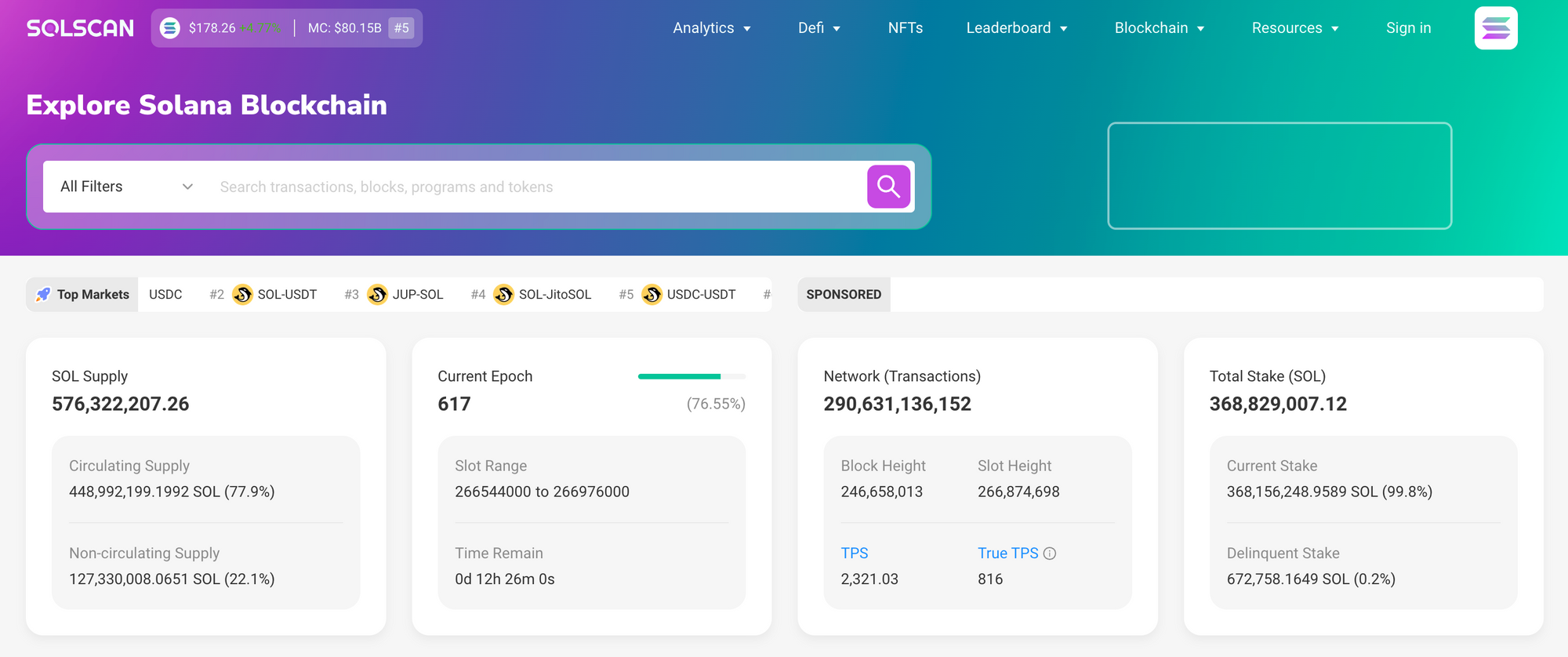
When I first opened Solscan I thought: neat layout, less clutter. Whoa! The dashboard loads quick. The block and tx views are straightforward. But actually, wait—let me rephrase that: speed is only one part. The clarity of metadata (token mint info, owner history) matters more when you’re researching an NFT drop. At first glance you get supply counts, recent owners, and token standards. Then you can dig: mint tx, indexer notes, contract calls. My gut said this would be enough for most casual collectors, and it usually is.
Something felt off about other explorers where NFT transfers were split across multiple pages. Solscan tends to consolidate that. On one hand, consolidation is useful; though actually, when the indexer lags, that consolidated view can miss the latest micro-transfers. So, caveat: sometimes you still need to cross-check with node RPC calls if timing is critical. I’m not 100% sure about how often those lags hit during major drops, but in heavy traffic I’ve noticed small delays—very very small, but present.
I’ll be honest: the UI isn’t perfect. Some tooltips read like they were written quickly (oh, and by the way…), and occasionally the search syntax is picky. But overall, the UX beats a lot of competitors. It’s also got developer-friendly pages—JSON snippets, api endpoints, and contract metadata—without making you feel lost. Initially I thought it was aimed only at collectors; after a week of digging I realized it’s equally useful for devs doing quick audits.
How I use Solscan to track NFTs
My routine: check the mint, follow the owner history, and watch liquidity movements. Really? Yup. The NFT tracker features let you see token holders and the exact mint transaction—down to the wallet that paid the fees. That can tell you whether a mint was done by a project dev or a bot, which matters. Something else—Solscan surfaces the token’s metadata URI (if available). That matters for provenance and proving the artwork ties back to the mint.
On a recent drop I watched an NFT mint page and noticed a pattern: many wallets minted in rapid succession from a small IP range. My instinct said “botfarm” and the owner history later confirmed it. Initially I thought the sales volume was organic, but then realized the flurry of mints was concentrated—so volume was inflated. This is why you should not just look at raw numbers.
Pro tip: use the event logs and parsed instructions. They tell you whether royalties were enforced, which marketplace facilitated a sale, and which program was used. Those details matter for collectors who care about creator royalties or want to avoid shady secondary-market routes. It also helps spot washed sales or circular trades.
Solscan for traders and devs — practical examples
For traders, the mempool-like view (pending txs) and fee metrics are gold. Wow! You can see which txs are getting prioritized and how fee bidding behaves during congestion. That said, it’s not a literal mempool like Ethereum explorers sometimes show, but it’s actionable. My workflow: glance at recent high-fee txs, then check the related accounts. If I see a wallet moving large positions into a market, I flag it.
For devs, the contract interaction view makes debugging easier. Initially I thought I’d need CLI logs, but Solscan often gives enough context to spot an incorrect instruction or missing account. Actually, wait—if you’re debugging deep program logic you still need local tools. Solscan is a complement, not a replacement. Still, being able to forward a URL to a colleague for quick triage is super helpful.
Here’s another real example: during a token launch I noticed a pattern of repeated small transfers from one account to many wallets. My instinct said “airdrop automation”—and it was. The transfer breakdown helped us estimate distribution fairness. That kind of detective work is why I keep the explorer pinned in my browser.
Limitations and when to look elsewhere
Okay, so check this out—no tool is perfect. Solscan’s indexer can lag during very high throughput. Really? Yes. During some big NFT drops or DeFi storms, fresh txs might appear a few seconds to a couple minutes late. For most users that’s fine. For front-running detection, it’s not ideal. Also the analytics depth can be lighter than enterprise-grade analytics platforms. If you want deep chain-wide correlations, you’ll need specialized tooling or raw data exports.
On the privacy side, remember that on-chain data links wallets to activity, which is public. Solscan just makes that easier to read. If you’re trying to obscure actions—well, don’t assume explorers will hide anything. I’m biased, but transparency is a feature for accountability and it bugs me when people act surprised by public chains.
Common questions I get
Can I reliably track royalties and creators with Solscan?
Mostly yes. The explorer shows program interactions and royalty-related instructions when projects use on-chain standards. But some creators keep metadata off-chain or use custom programs, so you’ll want to verify by checking the mint tx and metadata URI. Also check marketplace traces to see if royalties were honored.
Is the NFT tracker accurate for quick decisions?
Generally accurate for quick assessments. It surfaces owner history, transfers, and metadata. For split-second trading or bot detection you may want supplemental real-time feeds, but for most collectors it’s more than enough.
Where can I try it now?
Try the solscan explorer and poke around a few mint and transaction pages. You’ll see what I mean—some things are obvious right away, others take a bit of poking to reveal.
Alright—here’s the wrap, but not a stiff formal ending. Initially I came in skeptical. Over time I found Solscan to be a practical middle ground: fast UI, useful NFT-centric views, and enough dev features to be handy without being overwhelming. On one hand it’s not flawless; on the other, it solves the problems I care about every day. I’m not 100% evangelical—there are other tools that shine in other niches—but for everyday Solana work, it’s my go-to. Hmm… maybe you’ll find a different favorite, but give it a serious look. Seriously? Yep. You’ll see why.